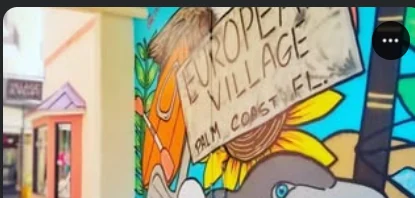
A playbook for Village Open-Air Market vendors. Today's sales are golden eggs. The market itself is the goose. Here is how to feed it — so the eggs keep arriving.
The goose, the golden eggs, and your market booth
Stephen Covey opens The 7 Habits of Highly Effective People with one of the oldest stories we know: the farmer with a goose that lays golden eggs. Every morning, one perfect golden egg. The farmer gets greedy, kills the goose to grab all the eggs at once — and finds nothing inside but an ordinary bird. No more eggs. Ever.
Covey turned that fable into a principle he called the P/PC Balance. P is Production — the eggs, the sales you make today. PC is Production Capability — the goose, the underlying thing that makes future sales possible. True effectiveness, he argued, is the constant balancing act between getting today's results and protecting the engine that produces tomorrow's.
For vendors at a farmers market, that engine is the market itself — its energy, its novelty, its ability to draw a crowd week after week. Every Sunday you sell at the Village Open-Air Market, you're collecting golden eggs. But if you and the rest of us never tend to the goose — if every vendor is here every single week, with the same booth, the same products, the same offer — the goose gets tired. Foot traffic flattens. Regulars stop coming because they "already saw it last week." And the eggs stop arriving.
This article is about feeding the goose.
The stale market problem
There's a threshold in farmers market design that most vendors never hear about. Markets with hundreds of vendors — places like the Daytona Flea & Farmers Market with 600+ booths — can run the same vendors every week and still feel fresh. The sheer scale means a customer can come ten weeks in a row and never see the same 80% of the market.
Markets our size — 40 to 54 vendors — operate on different physics. When the same faces are in the same spots every Sunday for six months, even the most loyal customer starts to feel like they've "done" the market. They stop bringing visiting friends. They skip a week, then two, then four. Foot traffic doesn't crash — it erodes, slowly, in a way that's hard to attribute to any single cause.
The most successful small and mid-sized markets fight this with one tool above all others: rotation. Vendors come every other week, or two Sundays a month, or one weekend on and one off. The market changes shape week to week. Customers can't predict exactly what they'll find — which is precisely why they keep coming back to find out.
The Wisconsin Economic Development Corporation, the Farmers Market Coalition, and Penn State Extension all reach the same conclusion in their vendor guides: vendor and product diversity, refreshed regularly, is the single biggest driver of long-term foot traffic at small markets. Keeping a "flexible space for rotating vendors or seasonal additions" is not a nice-to-have — it's how the goose stays alive.
Here's the part vendors often miss: rotation isn't bad for your sales. It's the thing that protects them. A rotated booth on Week 2 sells more than the same-every-week booth on Week 8, because the crowd is bigger, the energy is higher, and the customers who showed up are expecting to see something they didn't see last time. Scarcity makes you more valuable, not less.
Tell customers your schedule — loud and clear
If you're going to rotate, your customers need to know when to find you. The biggest mistake rotating vendors make is going quiet between appearances. Customers don't memorize calendars. They show up, don't see you, and assume you've left the market for good.
Three things to put in front of every customer who walks past your booth:
- A printed schedule card. Hand one out with every transaction. List your next four market dates. "We'll be back May 18, June 1, June 15, and June 29." That card lives on a refrigerator. It's the cheapest, highest-conversion marketing tool you own.
- A sign at your booth on your last day. "We're at every other Sunday — see us next on June 1." People will photograph it.
- A clear note in your social bios and on your website. If someone Googles your business on a Saturday night, they should be able to see whether you'll be at the market tomorrow.
Don't be subtle about this. Repeat your schedule everywhere, every week, until it feels excessive — that's about when customers will start remembering it.
Make your social posts repostable
Every market Sunday, the Village Open-Air Market posts on Facebook, Nextdoor, and Instagram. Those posts are amplifiers waiting to happen — but only if you give them something to amplify.
The pattern that works:
- Post your own announcement Friday morning. Not Saturday. Not market morning. The research is unanimous on this — people make weekend plans on Thursdays and Fridays. By Saturday evening, they've already decided what they're doing Sunday.
- Tag the Village Open-Air Market and European Village. When you tag us, we see it, and we share it. A vendor's solo post might reach 200 people. A vendor's tagged post that gets reposted by the market reaches the market's full audience plus yours — often 10× the reach.
- Lead with the specific. "Sweet corn picked Saturday morning." "Last batch of strawberry preserves of the season — only 18 jars made." "New: handmade soap with local sea salt, debuting Sunday." Specificity is what makes people screenshot a post and text it to a friend.
- Use video. A 15-second clip of you pulling baked goods out of an oven, or harvesting herbs at sunrise, will out-perform a polished photo every time. Phones are fine. Authenticity beats production value.
When customers see consistent, vivid Friday posts from a vendor — and the market reposts them — that vendor becomes a destination, not a discovery. People plan their Sunday around showing up before you sell out.
Use the Palm Coast Farmers Market app
This is the single most underused tool in our market right now, and it solves the exact problem rotation creates.
Inside the app, every vendor gets a complete profile — your story, your products, your photos, your social links. And every vendor can book the markets they'll be at ahead of time. When customers open the app, they see exactly which Sundays you'll be on the plaza.
If you've been with us a while and you've never built out your profile, here's what you're leaving on the table:
- A customer who searches for "honey" in the app sees your booth, your story, and your next three confirmed Sundays. That's a planned visit, not a chance encounter.
- A customer browsing the app on a Tuesday can favorite your booth and get a reminder when you're booked next.
- The app surfaces booked vendors over unbooked ones, so the vendors who plan ahead get the visibility.
Two action items, today:
- Log into your vendor profile and complete it — bio, photos, product list, social handles, contact info. Fifteen minutes of work that pays you back every week.
- Book your next three or four market dates in the app. Even if your schedule shifts later, having dates on the calendar makes you findable. An empty calendar tells the algorithm — and the customer — that you're not here.
If you're not sure how to do either of these, contact the market office. We'll walk you through it.
Five more tactics to keep your booth fresh
Once you've fixed the schedule, the social repost loop, and the app, the rest is about giving customers a reason to come specifically to find you each time you're back.
1. Rotate your product line, not just your dates.
Every market should feature at least one item your regulars haven't seen before. A new flavor, a seasonal special, a small-batch experiment, a limited-edition item. "What's new this week?" is the question every regular asks. Give them an answer.
2. Tell the story behind the product.
Customers come to a farmers market because they want to know the who and the why, not just the what. A handwritten card next to the jam explaining where the fruit came from will sell more jars than a price tag will.
3. Build an email list at your booth.
A clipboard, a sign-up sheet, a small sample as the incentive. Email is still the highest-conversion channel for repeat farmers market sales. The Farmers Market Coalition calls it "the single most effective way to turn occasional buyers into weekly regulars."
4. Coordinate cross-promotion with neighboring vendors.
A bread baker and a jam maker should be talking. A coffee roaster and a baker should run a Sunday combo. The market wins, the customer wins, and you both sell more than you would alone.
5. Show up early, stay until close.
Vendors who pack up at 2:30 because traffic slowed are training their customers to come early next week. Vendors who stay until 3:00 sharp, smiling, are training the late-afternoon crowd to come find them. Discipline at the edges of the day compounds over a season.
Bring your friends: a vendor is the best recruiter we have
Here's the truth about every farmers market on Earth: a market with one vendor is nothing. A market with ten vendors is a parking lot with tents. A market with fifty great vendors is a destination. A market with eighty? That's a tradition. That's the kind of place where 2,000 people show up every Sunday whether it rains, whether it's hot, whether anybody advertised.
Foot traffic doesn't care about any single booth — it cares about the community of booths. The crowd shows up because they know they'll find honey and sourdough and hot sauce and cut flowers and hand-thrown pottery and the food truck with the brisket sandwich and the band on the European Village stage. Take any one of those away and the crowd still comes. Take all of them away and the parking lot is empty.
So here's the ask, and it might be the most important thing in this whole article:
Every other market you sell at — every craft fair, every outdoor festival, every pop-up — you are surrounded by vendors who would be a perfect fit for the Village Open-Air Market and don't know we exist.
Tell them.
- The cheese maker two booths down at the Saturday market in St. Augustine. Tell her.
- The candle guy you met at the Ormond Beach craft fair. Tell him.
- The salsa company at the Daytona market that always sells out. Tell them.
- The woodworker, the dog treat baker, the small-batch coffee roaster, the soap maker, the woman with the incredible jewelry, the kid with the lemonade stand who's better than half the adults — all of them.
When you recruit a vendor, three things happen at once:
- The market gets stronger. A new booth means a new reason for customers to come, and a new pull on the foot traffic for everyone — including your booth.
- You build the rotation pool. The more great vendors we have, the more flexible the schedule becomes, the easier it is for any individual vendor to take a Sunday off without leaving a gap.
- You earn social capital. The market remembers who brought who. Vendors who recruit other strong vendors get prime placement, marketing support, and first call on featured opportunities.
How to actually do it: Carry a few of our cards in your booth. When a vendor at another market gives you their card, give them ours. Mention us in vendor Facebook groups. Send a quick text: "Hey — I sell every other Sunday at the Village Open-Air Market in Palm Coast. You'd kill it there. Worth checking out." Then connect them with the market office.
You are the best recruiters we have because you know the things we don't — who shows up on time, who has clean product, who works well next to other vendors, who has the kind of story that draws a crowd. Every vendor you bring in is one we didn't have to find on our own, and one who was vouched for by someone we already trust.
A rising tide lifts all boats. A growing vendor list lifts everyone's Sunday.
Feed the goose
Every Sunday at the Village Open-Air Market is a golden egg. A good morning of sales, a few new customers, a few stories told. Easy to grab and go.
But the goose — the market itself — needs to be fed. By rotating your dates so the market stays fresh. By telling customers exactly when to find you. By making posts the market can amplify. By building out your app profile so booking dates does the work of finding you.
Vendors who only chase eggs get a few good Sundays. Vendors who feed the goose get good Sundays for years.
We'd rather have you here for years.
— William Meyer, CMO, Village Open-Air Market
Vendor next steps
Build out your app profile, lock in your next four Sunday bookings, and reach the market office with any questions about coordinating rotation with other vendors.